
Most fraud teams are working with a solid set of signals. Who the user is, what device they're on, what payment method they're using, whether the identity checks out. Identity-based detection has come a long way, and for a lot of fraud, it does the job.
Here's what it doesn't tell you: where the device actually is.
That gap is where location spoofing lives. Someone fakes the location their device reports, and a signal your tools treat as trustworthy quietly becomes the weakest one in the stack. It used to be a thing people did to cheat at mobile games. Not anymore. If your fraud tools route work, gate access, or clear accounts based on where someone is, location is a signal you can't afford to take on faith.
So let's break it down: what location spoofing is, how it works, why identity signals alone miss it, where it shows up, and how location verification closes the gap.
What is location spoofing?
Location spoofing is when someone fakes the location their device reports, so it looks like they're somewhere they're not. Someone in one city shows up as another. Someone outside your service area appears inside it. Someone in a sanctioned country looks like they're in Ohio.
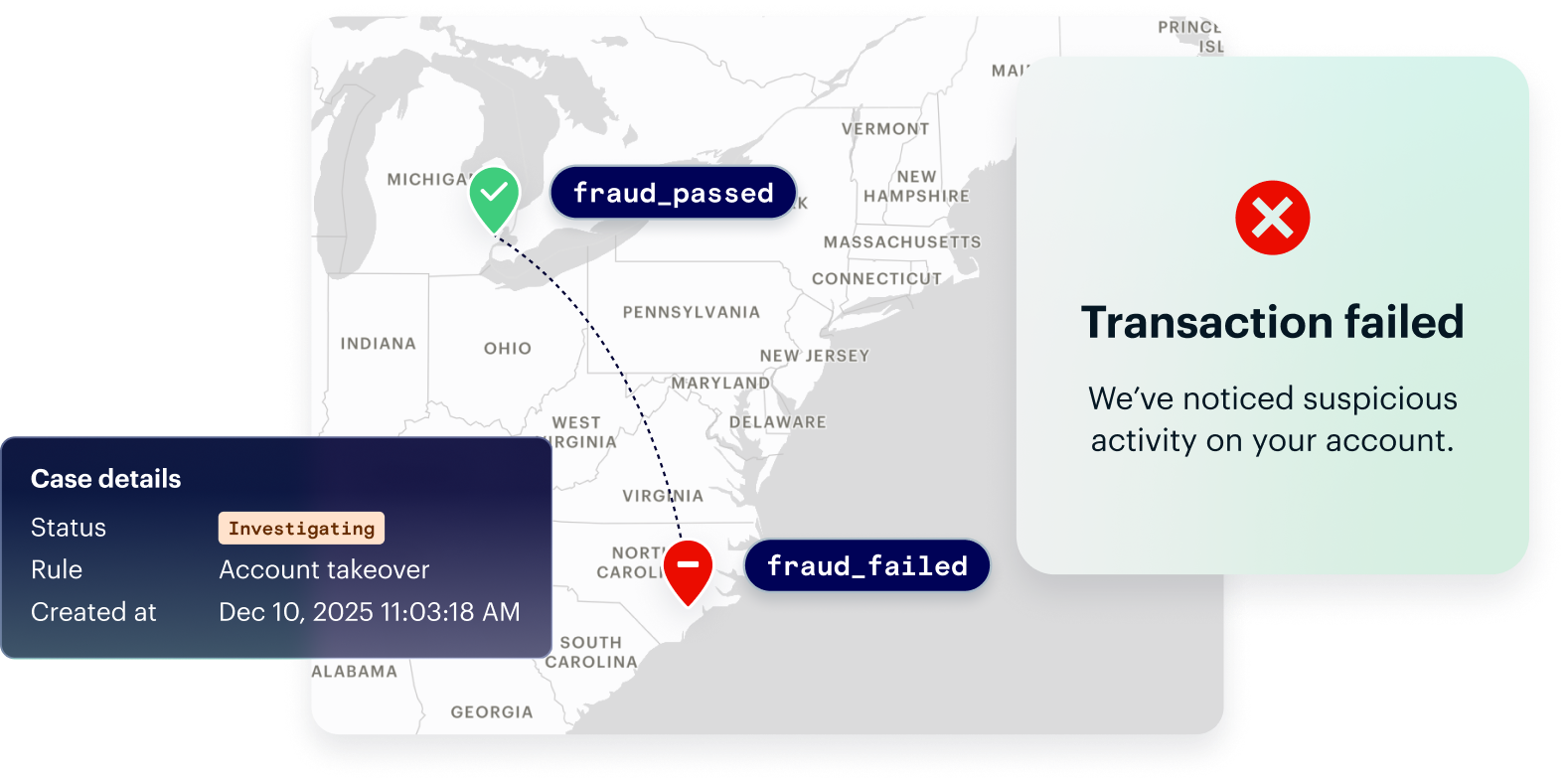
A few terms get mixed up here, so let's be clear about the differences.
- GPS spoofing is the version that fakes the satellite signal a device uses to figure out where it is
- VPNs and proxies work at the network level, hiding an IP address instead of the device's coordinates
- Emulators fake an entire device in software
They all do the same job, and the sophisticated stuff usually stacks several at once. That's a big part of why checking just one signal doesn't cut it.
How location spoofing works
You don't need to know how to spoof a location to defend against it. You do need to know the categories, because that's how you map where you're exposed.
The easy stuff is built right into mobile operating systems, which include developer and mock-location settings that let a device override what it reports. From there it escalates: modified devices like jailbroken or rooted phones hand over deeper control, dedicated spoofing apps automate the whole thing, and emulators fake a device and its location entirely in software. That last one is what turns a single laptop into a fraud operation running hundreds of fake accounts.
Every one of these hits the same soft spot. Your fraud tools are trusting the device to tell the truth about where it is, and the device can be told to lie.
Where identity signals stop and location starts
You're almost certainly running identity and fraud tools already, and they're good at what they do. The catch is they were built to answer a different question than "where is this device right now."
Identity verification tells you who someone claims to be, but a totally real identity can still log in from a totally fake location. Transaction monitoring watches what got bought and how it got paid for, not where the device physically was when it happened. IP geolocation gets closest, and a proxy still beats it in seconds. Onboarding checks catch the bad actor at the front door, then stop watching the second they're inside.
That's the blind spot. The costly part is that most systems don't find the spoof until after the decision has already happened. Whether the ride was dispatched or the payout moved, at that point, the tools aren't preventing fraud anymore. They're investigating a loss.
The fraud hides in the gap between the location you think is real and the one that actually is. The only way to close it is to verify the device and its location signal directly, at the moments that count.
Where location spoofing shows up
Same trick, different damage depending on the industry. Here's how it plays out across the platforms dealing with it most.
Rideshare
Drivers fake their GPS to pop up inside surge zones or airport queues, grabbing premiums and cherry-picking the good trips without ever being there. And it's not just the bogus payout. Fake supply in a surge zone blocks real drivers from getting routed there, so riders end up paying for a marketplace that doesn't actually exist.
Food delivery
Couriers spoof location to claim deliveries from outside the zone, fake completion events, or quietly hand their verified account to someone who couldn't pass a background check. That last one's a real liability problem, because you approved one person and a different person is doing the driving.
Payments and financial services
Users mask their location to clear KYC from a restricted or sanctioned jurisdiction, opening accounts they were never allowed to have. Now it's not just a fraud problem, it's a regulatory one, and it snowballs fast when the location data was sitting right there before the account ever cleared.
Marketplaces
Fake listings get spoofed to look local on purpose, because "two miles away" feels trustworthy and "across the country" doesn't. Sellers and device farms fake their location just long enough to look real, collect a deposit, and vanish.
How platforms actually catch it
Spoofing is catchable. Identity signals just aren't the ones that catch it. The trick is checking the signals a spoof can't fake all at the same time.
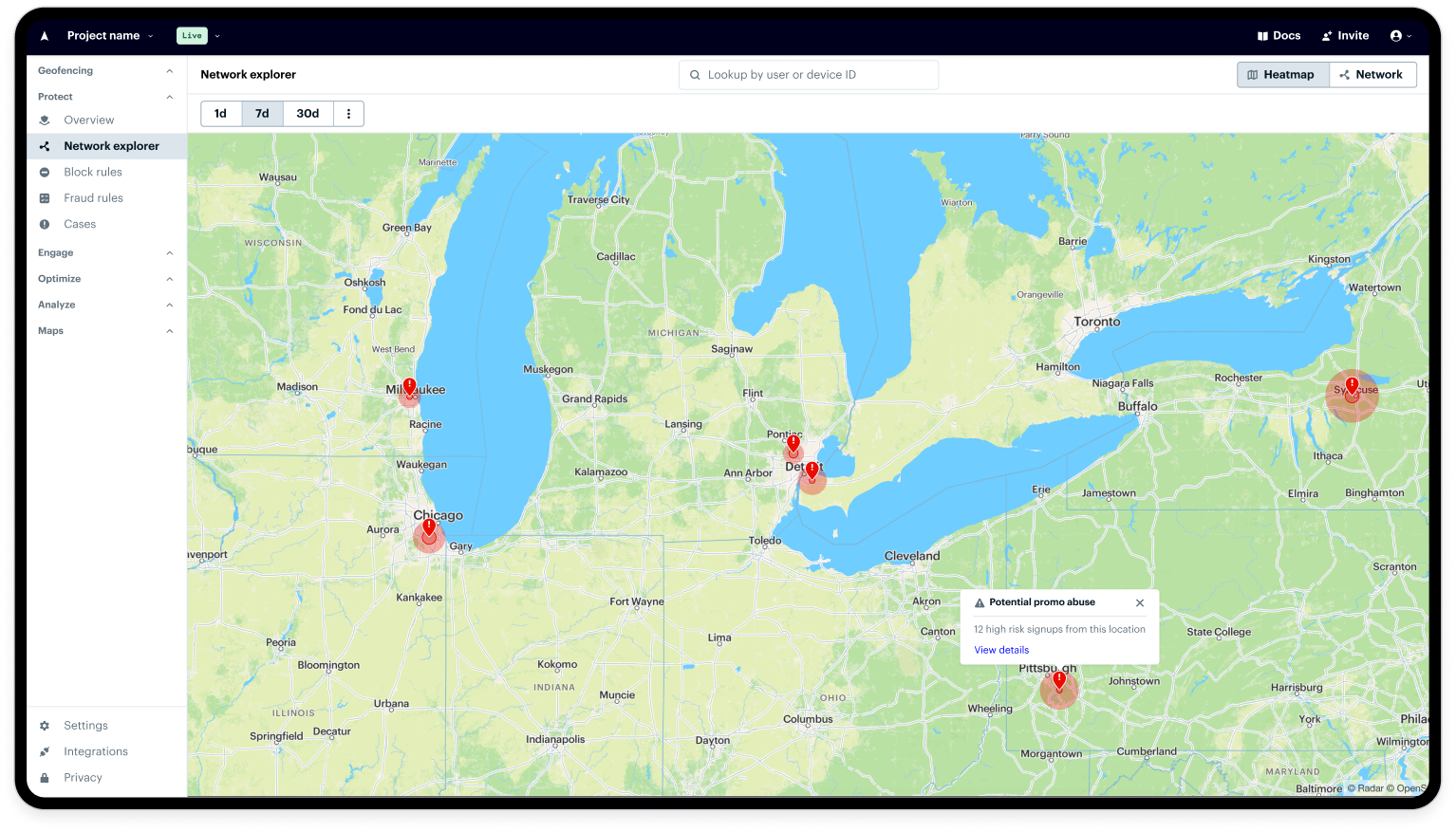
The approaches that work layer a few things together. Device integrity flags jailbroken, rooted, or emulated environments. Signal consistency cross-checks the GPS location against IP, network, and ambient context like Wi-Fi and Bluetooth, which surfaces the mismatches a single check would sail right past. Movement plausibility catches impossible travel and motion that no real human would make. And device linkage exposes the shared infrastructure behind accounts that look totally unrelated on paper.
Then there's timing, which is the part most teams get wrong. You have to catch the spoof before the thing happens, not after. Flagging it once the payout's gone, the account's cleared, or the order's shipped means you're just documenting a loss. The platforms that win at this verify location at the moment of dispatch, login, account opening, or checkout, while there's still time to do something about it.
What this looks like in practice: DICK'S
DICK'S built an app-only reservation system.
The fraud angle came out of one of retail's nastiest grey-market headaches: limited sneaker drops. When demand for a release blows past supply, resellers swarm to buy up everything they can. To keep hyped styles landing with actual customers, DICK'S built an app-only reservation system that picks winners at random, then lets them ship the shoes or grab them in store.
Pickups are capped at a 100-mile radius and enforced through the app's fraud detection.
And location spoofing is exactly what that enforcement has to beat. Every time an app user walks into a store, the app fires an event to Radar, and that stream is what makes a spoof visible. DICK'S director of product explained it well, stating that if someone seems to enter a store in New York City and then turns up in a Pittsburgh store 30 minutes later, that impossible travel is the giveaway, and those users get filtered out. The whole point is keeping the shoes reaching real people, and the right people.
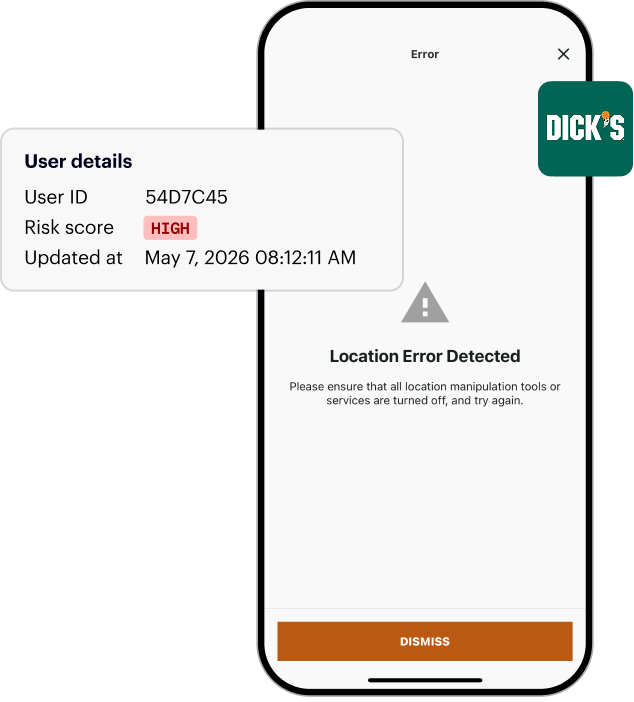
Location spoofing blocked in the DICK'S app
One of the lessons here is that the same impossible-travel and signal-consistency checks that protect a rideshare queue or a payments onboarding flow are the ones protecting a retailer's most fought-over inventory.
What to look for in a location verification tool
If you're shopping around, here's what separates real location verification from tools that just sort of approximate it:
- Real-device GPS verification, not just IP-based location
- Spoofing and tampering detection that covers jailbroken, rooted, and emulated environments
- Environment fingerprinting that uses ambient signals like Wi-Fi and Bluetooth
- Custom rules, so your team can build detection logic around your own fraud flows
- Something that plugs into your existing fraud stack instead of forcing a rip-and-replace
They all come back to the same idea. Your location signal is only as trustworthy as the layer checking it.
Getting the tools to help
Location spoofing isn't one problem with one fix. It's a single trick that shows up differently across rideshare, food delivery, payments, marketplaces, and retail, and it stays invisible to anything that only looks at identity and transactions.
Radar Protect is built for the layer where this fraud actually lives. It uses precise GPS verification, location spoofing detection, and environment fingerprinting, including ambient Wi-Fi and Bluetooth signals, to confirm a device is really where it says it is. It works alongside your existing fraud stack and sits inside the same platform your team already uses for geofencing, address validation, and maps.
See what Radar's location infrastructure and intelligence can do for your business. Get a demo.
Frequently asked questions
What is location spoofing?
Location spoofing is faking the location a device reports so it looks like it's somewhere it isn't. People use it to get around location-based rules for eligibility, pricing, payouts, and access, and it's a common way in for organized fraud across rideshare, delivery, payments, and marketplace platforms.
What is GPS spoofing?
GPS spoofing is a specific kind of location spoofing that fakes the satellite signal a device uses to calculate where it is. It's different from using a VPN or proxy, which hides a network IP address rather than the device's actual coordinates.
How is location spoofing detected?
Good detection combines a few signals: device integrity checks for jailbroken, rooted, or emulated environments, consistency checks across GPS, IP, network, and ambient signals like Wi-Fi and Bluetooth, and movement analysis that catches impossible travel. The key is verifying location at the moment of a high-risk action, not after it.
What's the difference between GPS spoofing and using a VPN?
A VPN hides a device's IP address at the network level, so the user looks like they're connecting from somewhere else. GPS spoofing fakes the device's actual physical coordinates. Sophisticated fraud often runs both at once, which is why detection can't rely on IP geolocation alone.
Why can't IP geolocation stop location spoofing?
IP geolocation only reflects the network a device connects through, and proxies and VPNs reroute that in seconds. It tells you nothing about where the device physically is, so someone can beat it without ever touching their GPS coordinates. Catching a spoof reliably means verifying the device and its location signal directly.