Fraud teams have never had a shortage of data about who someone claims to be. What they’ve been missing is where that person actually is. Radar’s location intelligence signals are now available inside Socure’s RiskOS, bringing real-world location into the same decisions your team already makes.
Why can’t traditional signals show where a user really is?
Identity and device checks tell you who someone claims to be and what they’re using, but they can’t reliably tell you where that person physically is. IP-based location is easy to hide with VPNs, residential proxies (proxies that route traffic through a real home internet connection to mask the true location), and spoofing tools.
That’s the gap we built this partnership to close. Precise location means verifying a user’s real-world position using signals like GPS, Wi-Fi, Bluetooth, and device sensors, going beyond what an IP address can show.
Socure tells you who someone is. Radar tells you where they are. Together, you see the whole person, and you decide with confidence.
What does precise location add to Socure RiskOS?
RiskOS is Socure’s decisioning and orchestration platform, where identity, device, and risk signals come together into a single risk evaluation. Radar’s signals now sit in that same workflow.
Socure has built one of the most trusted identity and risk platforms in the industry, and we’ve spent years building the infrastructure to verify precise location at scale. Neither of us wanted customers choosing between the two or stitching them together on their own, so we built the integration ourselves.
One workflow, across all your signals, built on more than either platform could offer alone.
What fraud does precise location catch that traditional signals alone miss?
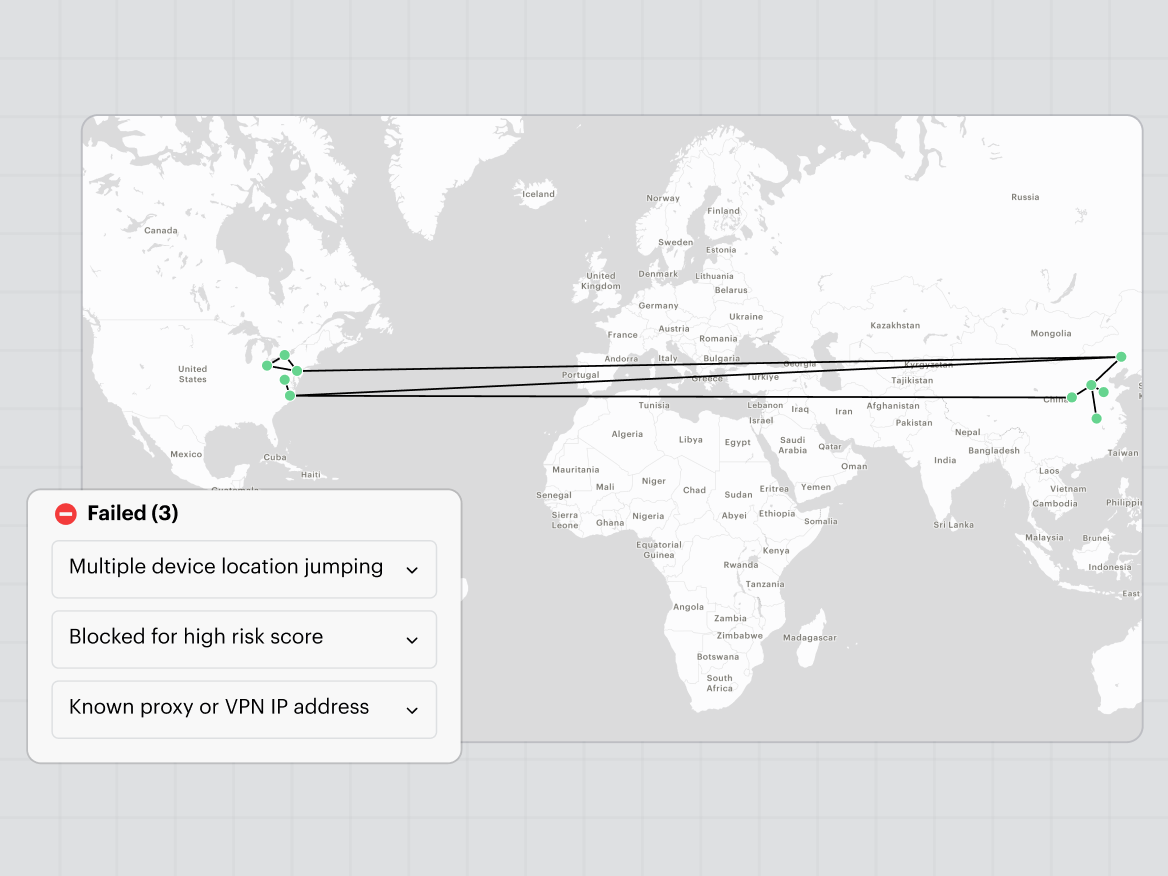
Precise location surfaces patterns that are invisible when each account is evaluated on its own. RiskOS can now evaluate Radar signals like location spoofing and geographic hotspots of fraudulent activity alongside the identity and device signals it already checks.
Coordinated activity and hotspots
A hotspot is a suspicious concentration of users or devices converging on the same physical location. It’s a common sign of multi-accounting, mule networks, and device farms that you can’t see one account at a time.
Account takeover and account sharing
Radar flags unexpected changes in a user’s or device’s location pattern that don’t match established behavior. That can indicate compromised credentials or an account being shared.
Location spoofing and residential proxies
Radar signals that a reported location may not be real, then feeds that straight into the risk decision, so it doesn’t need a separate review step.
The strongest fraud signal is often the one traditional checks can’t see: the real-world connections between users, devices, and accounts.
How does the Radar and Socure RiskOS integration work?
You integrate both SDKs, and Radar’s signals become available inside RiskOS workflows. Setup has three steps, and there are two ways to get the signals into RiskOS:
- Integrate both the Radar and Socure SDKs in your app.
- Configure the connection so Radar signals can reach RiskOS.
- Send or retrieve the signals: either pass Radar signals into a RiskOS evaluation, or let Socure retrieve them using a Radar location check ID, a unique reference to a specific Radar location verification.
Setup is one integration on each side, and the result lands in the workflow you already run.
When should you trigger precise location verification?
Trigger precise location verification when risk warrants it. You can configure verification for onboarding, login, authentication, transfers, and withdrawals, and keep legitimate customers moving.
Radar verifies where the user actually is and streams location signals back into RiskOS to inform the decision. That keeps scrutiny where the risk is and keeps trusted users moving. Apply stronger verification only where money or access is at stake.
Does Radar replace my existing fraud stack?
No. Radar is a complementary location layer, not a replacement. It works alongside Socure’s identity, device, and risk signals and doesn’t ask you to rip out anything that’s already working.
We built this because customers kept asking how Radar and Socure could work together, and because we believe the strongest fraud and risk stacks combine the right partners rather than relying on one platform to do everything.
This adds the signal that’s been missing, directly into the decisions you’re already making.
Who should use Radar with Socure?
Any team where a risk decision depends on knowing not just who someone is, but where they actually are:
- Fintech and financial services: account takeover, mule activity, and risky transfers or withdrawals before money moves
- Gaming: geo-compliance and promo abuse
- Marketplaces: coordinated fake accounts and device farms
- On-demand and gig platforms: account sharing and spoofed locations
Identity, and location signals combined create the most accurate and consolidated view of your customer interactions. Get in touch to learn more.